

The wrong platform fights you on every order, and you only notice once you're locked in.
Sell on theright platform.Connect the rest
Store, stock, orders and payments, running as one

Selling online shouldn't be this manual

Stock says one thing online, another in the back; someone reconciles it by hand.

Add a marketplace and you're suddenly running the same shop twice.
How it works
One store, wired into everything
- 01
Pick the platform
The right one for your products and how you sell, not the one we resell most.
- 02
Build the store
Designed around the buying journey, not just to look the part.
- 03
Connect it
Stock, orders, payments and tills speaking to each other through one planned system.
- 04
Optimise & support
Review what sells, measure the experience and keep the operation running.
What's included
Whatever the store needs

WooCommerce

Shopify

Custom

Marketplaces

EPOS Integrations
- Payments & inventory
- Multisite & international
- Plugins


FAQ
E-Commerce Systems: common questions
Shopify or WooCommerce: which is better for a small online shop?
Shopify suits a shop that wants hosting and security certificates included in one subscription, and WooCommerce suits a shop that wants full control of its store and data. WooCommerce is a free, open-source WordPress plugin, so its costs come from hosting, a domain, any paid themes and extensions, and payment processing fees. Shopify charges a monthly or yearly plan fee, and third-party transaction fees may apply if you use a payment provider other than Shopify Payments. DataDove builds on both and picks the platform that fits how you sell.
How do I keep stock in sync between my website, my shop and marketplaces like Amazon or eBay?
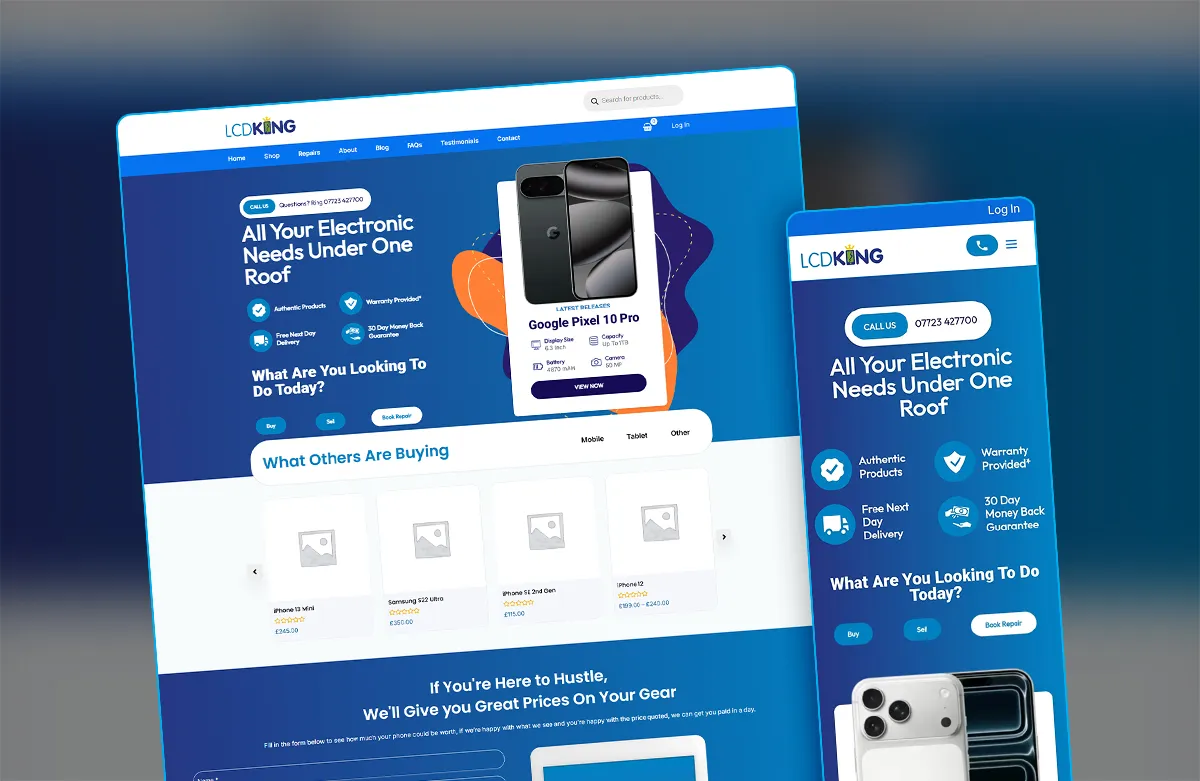
Keep one stock record and connect every sales channel to it, so a sale anywhere reduces the same count. Shopify POS syncs stock between the shop counter and the online store, and Shopify Marketplace Connect syncs listings, orders and inventory with Amazon and eBay; WooCommerce reduces stock as orders come in, and third-party extensions sync it with eBay and Amazon. DataDove connected LCD King's online and in-store inventory under one system, and marketplaces are among the platforms it works with.
Which e-commerce platforms does DataDove work with?
DataDove works with WooCommerce, Shopify, custom builds, marketplaces and EPOS integrations, and covers payments and inventory, multisite and international selling, and plugins. It built a multisite commerce estate for Salaam Cola's international operation, and its own Try-On Tool is a WooCommerce product built and supported in-house.
How does DataDove build and connect an online store?
DataDove builds an online store in four steps: pick the platform, build the store, connect it, then optimise and support. The store is designed around the buying journey and connected so stock, orders, payments and tills speak to each other through one planned system. After launch DataDove reviews what sells, measures the experience and keeps the operation running.
What does an e-commerce project cost?
An e-commerce project with DataDove is priced on the platform chosen and on how many systems need connecting to it, such as stock, tills and marketplaces, along with any multisite or international set-up. Prices are quoted net of VAT, the build starts once scope, price and timing are agreed in writing, and no payment is taken on the DataDove website.